

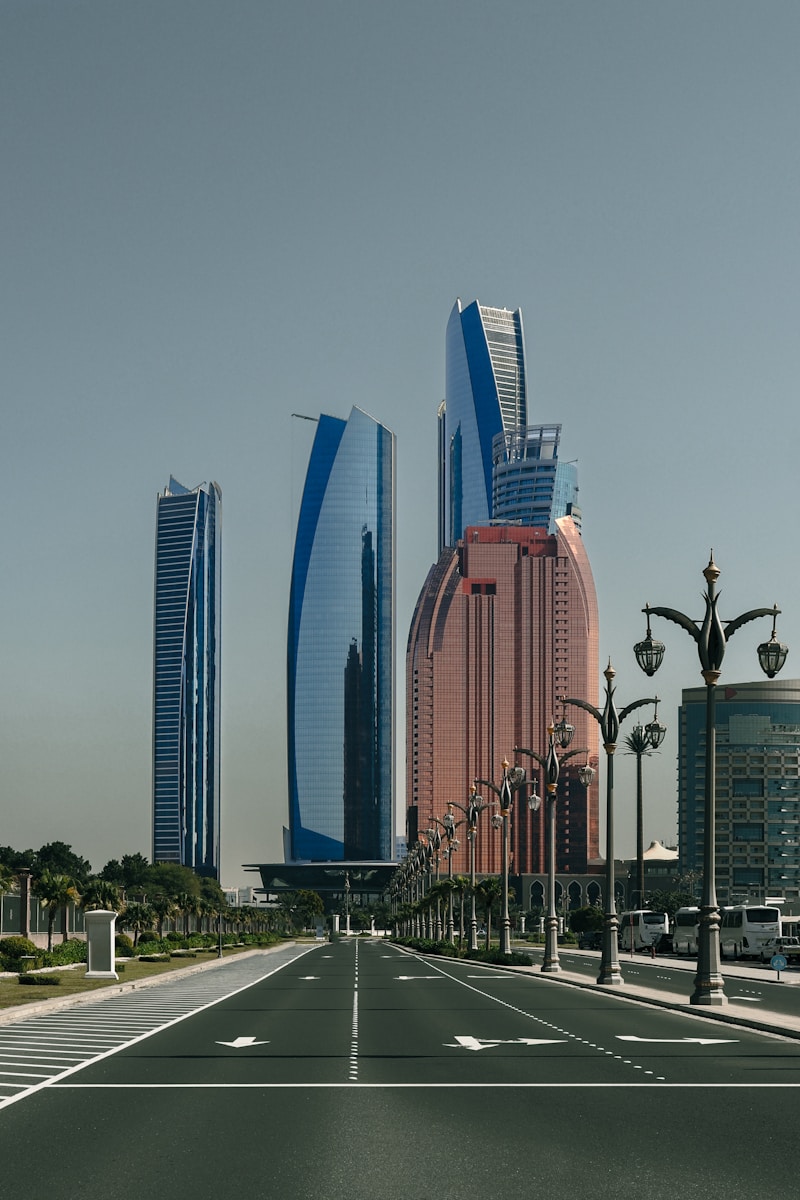
The Future of Real Estate in Dubai: Mortgage & Investment Predictions for 2030
Where Dubai Real Estate Is Actually Headed: Mortgage & Investment Outlook to 2030
I’ve been investing in Dubai real estate since 2018. Every year someone publishes a “Dubai property predictions” article full of words like “transformative,” “unprecedented,” and “poised.” None of it helps you make money.
This article is different. I’ll give you specific predictions with the reasoning behind them, grounded in what’s actually happening on the ground, in the regulator’s office, and at the central bank. If you’re trying to decide whether to buy, sell, or hold in Dubai over the next five years, this is for you.
The Numbers That Actually Matter
Start with what’s real. Dubai’s population crossed 3.6 million in mid-2024 and the D33 economic agenda targets 5.8 million by 2030. That’s roughly 60% growth in six years. Even if D33 hits only 70% of its population target, you’re still looking at ~400,000 new residents who need places to live. That’s the demand side.
On the supply side, the Dubai Land Department (DLD) recorded approximately 40,000 new residential units delivered in 2023, with a similar pipeline through 2026. Simple math: 400,000 new people divided by average household size of 3.2 equals 125,000 new housing units needed. Even on conservative estimates, demand outstrips supply by roughly 30,000 to 40,000 units over the next five years. Prices don’t go down when demand exceeds supply.
The D33 plan also aims to double Dubai’s GDP, push foreign trade to AED 25.6 trillion, and attract 400 new economic clusters. That’s not marketing fluff, it’s a budget with line items. Real estate is the single largest beneficiary of economic expansion in this city.
Mortgage Rates: What the USD Peg Means for Your Loan
Here’s the single most overlooked fact about Dubai mortgages: the UAE dirham is pegged to the US dollar at 3.6725. This means the UAE Central Bank follows the Federal Reserve’s rate decisions almost mechanically. When Powell raises, Khaled Mohamed Balama raises. When Powell cuts, UAE borrowers finally breathe.
As of early 2025, the Fed funds rate sits at 4.25-4.50%. UAE mortgage rates for salaried borrowers range from 4.99% to 5.49% for fixed-rate 3-year terms on salaried applications, with self-employed borrowers typically paying 50-75 basis points more. Variable rates track EIBOR, which follows the Fed funds rate with a spread.
Now here’s the prediction. The Fed’s own dot plot from December 2024 signals 50 basis points of cuts in 2025 and another 100 basis points through 2026. By 2027, the consensus among sell-side economists (Goldman Sachs, JP Morgan, Morgan Stanley) puts the terminal rate at 2.75-3.00%. If that holds:
- 2025-2026: Mortgage rates drop to roughly 4.25-4.75% as EIBOR declines. Refinancing activity spikes. Buyers who sat on the sidelines in 2023-2024 enter the market.
- 2027-2028: Rates settle at 3.50-4.00%. This is the sweet spot where monthly payments become comfortably lower than rent across most mid-market areas, triggering a genuine buy-over-rent shift.
- 2029-2030: If the Fed maintains its terminal rate, expect mortgage rates around 3.25-3.75%. At these levels, investors who bought cash in 2023-2025 will refinance and pull equity out, recycling capital into new purchases.
The risk to this forecast: inflation re-emerges and the Fed reverses course. But barring that scenario, the direction of travel for mortgage costs is down, and the timing matters. If you’re planning a purchase, 2026-2027 is likely the window where both rates and prices are favorable, before the rate cuts fully price into property values.
Use our mortgage calculator to model different rate scenarios against your budget.
Which Areas Will Appreciate Most (and Why)
Not all Dubai real estate is created equal. Here’s what I see happening by 2030.
Dubai South and Expo City: 40-60% appreciation potential. This is where the government is putting serious infrastructure money. The new Al Maktoum International Airport expansion (AED 128 billion, targeting 260 million annual passengers) is a gravity well for residential demand. Dubai South already has the Expo 2020 legacy infrastructure, the metro extension is coming, and logistics companies are clustering there. Current prices of AED 800-1,200 per square foot look cheap compared to the AED 1,800-2,500 in Dubai Marina. The gap will narrow.
Dubai Creek Harbour and Meydan: 30-45% appreciation. Emaar’s focus on these two waterfront districts is strategic. Creek Harbour is basically Downtown 2.0 with better planning. Meydan benefits from the new Ras Al Khor Road connectivity and proximity to both old and new Dubai. These are the areas where end-users, not speculators, are buying, which means stickier prices during downturns.
Jumeirah Village Circle (JVC) and Arjan: 20-30% appreciation. The mid-market sweet spot. JVC has absorbed massive supply and still sees 6-8% net rental yields. As more retail, schools, and clinics open in the community, the “inconvenient location” discount fades. Prices here track population growth more directly than luxury areas because the buyers are actual residents, not offshore capital.
Palm Jumeirah and Emirates Hills: 10-20% appreciation. These are mature luxury markets. They’ll appreciate but at slower rates because the base prices are already high and supply is constrained. The value here is in scarcity and foreign currency diversification for HNW buyers, not in price discovery.
Areas to watch cautiously: Districts with 10,000+ units in the pipeline and no unique demand driver (some parts of Dubailand, certain secondary locations in Sports City). Dubai has a history of oversupply in commodity-grade apartment towers. If you can’t articulate why someone would choose this building over the identical one across the street in three years, don’t buy it.
Regulatory Changes That Are Coming
The UAE Central Bank’s mortgage regulations (last updated in 2021) are overdue for revision. Here’s what I expect:
- LTV ratios will rise for first-time buyers. Currently capped at 80% for properties under AED 5 million. As the government pushes homeownership (a stated D33 goal), I expect this to move to 85% for UAE nationals and 82-83% for expat first-time buyers by 2027. The Central Bank has signaled comfort with higher LTVs when loan-to-income ratios are conservative.
- Off-plan mortgage rules will tighten. RERA has been quietly working on escrow account reforms that require developers to hit 50% construction before banks can issue mortgages on off-plan units. This protects buyers but will slow speculative flipping, which is healthy for the market long-term.
- Golden visa property threshold may drop. Currently at AED 2 million. With D33’s talent attraction goals, I wouldn’t be surprised to see this drop to AED 1.5 million by 2028, opening a larger buyer pool for mid-market properties.
What Smart Money Is Doing Right Now
I track what institutional investors and family offices are buying, not what’s trending on Instagram. Three patterns:
1. Income-producing mid-market portfolios. Groups are quietly accumulating 20-50 unit portfolios in JVC, Furjan, and Dubai South at 7-9% net yields, financing at 50-60% LTV. At current rates, the spread between cap rate and cost of debt is 200-300 basis points. That’s real carry.
2. Land banking near infrastructure. The Al Maktoum Airport corridor, the Etihad Rail route, and metro expansion zones. Land in these areas has doubled in five years and will likely double again by 2030.
3. Distressed luxury acquisitions. The ultra-luxury segment (AED 20M+) has pockets of motivated sellers who over-leveraged during the 2022-2023 boom. Cash buyers are picking up villas on Palm and in Emirates Hills at 15-20% below peak, knowing the global UHNW buyer pool keeps growing.
Risks You Shouldn’t Ignore
Every prediction has a downside. Here are the ones that keep me up:
- Oil price shock. UAE has diversified but oil still drives regional liquidity. A sustained drop below $50/barrel would slow everything.
- Oversupply in luxury apartments. The 2024-2027 delivery pipeline for AED 3M+ apartments is substantial. If global HNW appetite softens, prices correct.
- Geopolitical contagion. Dubai benefits from regional instability (capital flight), but a direct Gulf conflict is different from a proxy war in the Levant. The probability is low but the impact is catastrophic.
- Dirham de-pegging (unlikely but real). If the UAE ever floats the dirham, the entire mortgage market reprices overnight. I assign this a sub-5% probability through 2030, but it’s the kind of tail risk you should know exists.
Bottom Line
Dubai real estate through 2030 is a supply-constrained growth story supported by population inflows, government capital expenditure, and a declining interest rate environment. The opportunity is in mid-market buy-and-hold, not luxury speculation. Finance your purchases conservatively (50-65% LTV), lock in fixed rates when the terminal rate materializes around 2027, and focus on areas with infrastructure catalysts rather than developer marketing promises.
The people who will make money in Dubai real estate over the next five years aren’t chasing launch-day queues. They’re running the numbers, reading RERA supply reports, and buying where demand is structural, not speculative.
Sources: Dubai Economic Agenda D33 (u.ae), Dubai Land Department transaction data, UAE Central Bank mortgage regulations.

About the Author
Aasim Pathan
A passionate entrepreneur and tech enthusiast with a keen interest in building innovative digital solutions. He is the founder of Aspyre Labs LLC, a Dubai-based SaaS company focused on empowering freelancers, solopreneurs, and small businesses with simple yet powerful tools. With a forward-thinking mindset, he constantly explores opportunities to create products that solve real-world problems while maintaining efficiency and simplicity.
Visit Website