

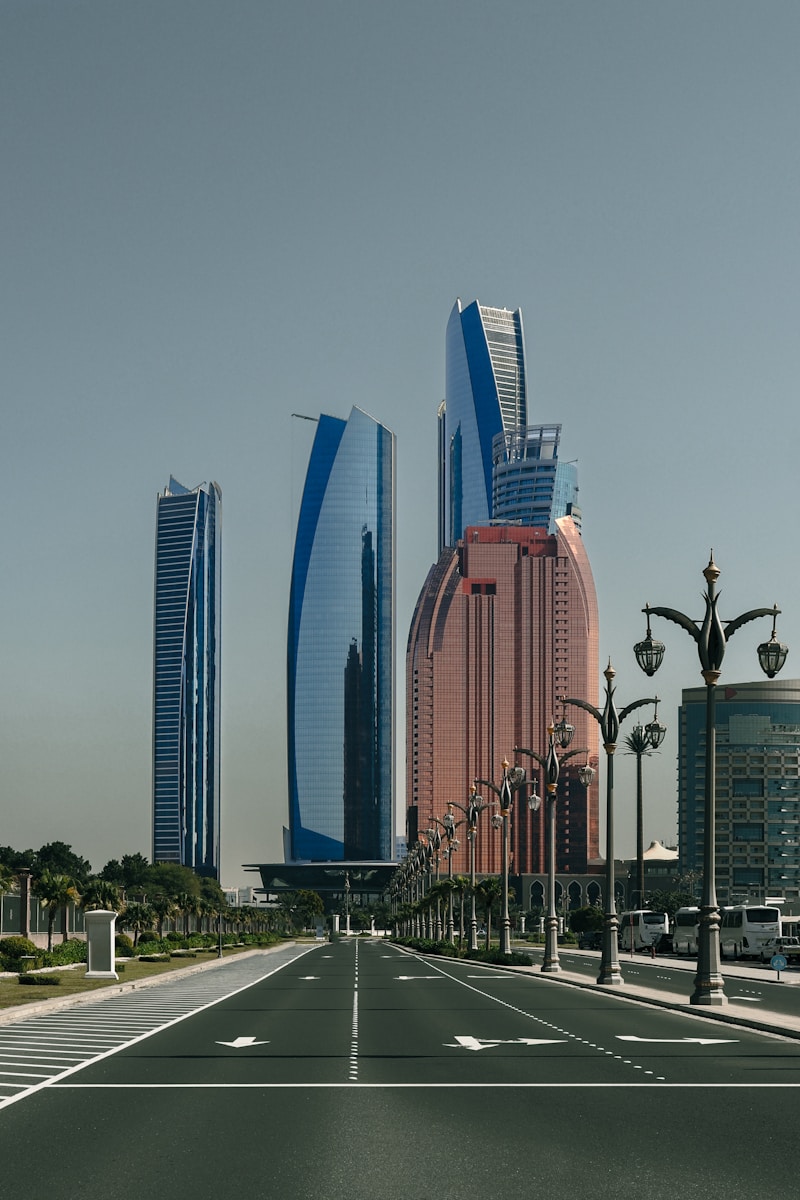
Living in Dubai vs Abu Dhabi: Which City Offers Better Property Value?
Dubai vs Abu Dhabi Property: Which City Offers Better Value in 2025?
The Dubai versus Abu Dhabi property debate is the most common question I get from buyers who are new to the UAE and deciding where to commit. Both cities have world-class infrastructure, zero personal income tax, and property markets that are fundamentally sound. But they appeal to different buyers, and the value proposition differs in ways that matter to your wallet. Here is an honest comparison grounded in the numbers that actually drive decisions.
Property Prices: The Numbers
Abu Dhabi is cheaper on a per-square-foot basis across most segments. According to market reports from Bayut and Property Finder covering late 2024:
- Dubai prime: Palm Jumeirah villas run AED 3,500 to 4,500 per square foot. Downtown apartments sit at AED 2,200 to 3,000 per square foot.
- Abu Dhabi prime: Saadiyat Island villas average AED 2,000 to 2,800 per square foot. Al Reem Island apartments range AED 1,300 to 1,800 per square foot.
- Affordable tier: Abu Dhabi’s Al Reef villas start around AED 700 per square foot. Dubai’s comparable communities like Town Square start closer to AED 900.
A four-bedroom villa in a comparable community costs roughly 20 to 30 percent less in Abu Dhabi. That gap narrows at the ultra-luxury end but persists across the mid-market where most buyers operate. Part of this is structural: Abu Dhabi restricts land ownership to UAE and GCC nationals, which limits the pool of buyers who can hold freehold title on certain land parcels. Dubai’s freehold areas are more broadly accessible, which increases demand and pushes up pricing.
Rental Yields: Where Cash Flow Lives
Dubai delivers better rental yields in most segments:
- Dubai mid-market: Communities like Jumeirah Village Circle (JVC) and Dubai Sports City consistently return 6 to 8 percent gross yield.
- Dubai prime: Marina and Downtown apartments yield roughly 4 to 5.5 percent.
- Abu Dhabi mid-market: Khalifa City and Al Raha Beach return 5 to 6.5 percent.
- Abu Dhabi prime: Saadiyat Island and Al Maryah Island yield 3.5 to 5 percent.
Dubai’s higher yields come from a larger, more transient expatriate population that creates sustained rental demand. The flip side is that Dubai rents are more volatile: they rose sharply in 2022-2023 and have since moderated in some areas as new supply entered the market. Abu Dhabi rents are steadier, which suits a buy-and-hold investor who values predictability over maximizing yield.
Market Stability: Abu Dhabi’s Quiet Advantage
Dubai’s market is dynamic, which means faster appreciation in the upswing and sharper corrections in the downturn. Abu Dhabi’s market moves more slowly in both directions. The Central Bank of the UAE does not publish property-specific indices, but the DLD’s transactional data shows Dubai prices correcting 25 to 35 percent between 2014 and 2020 before the post-pandemic surge, while Abu Dhabi’s correction was shallower across the same period.
If you are buying with a five-year horizon and can tolerate cycles, Dubai’s volatility works in your favor because you capture more of the upswing. If you are buying a family home for 15 years and want stability, Abu Dhabi’s lower amplitude is an asset.
Lifestyle: The Real Tradeoff
Dubai offers density, energy, and constant newness: 24-hour dining, world-record attractions, concentrated business districts like DIFC, and a social calendar that never really stops. Abu Dhabi offers space, calm, cultural depth (Louvre Abu Dhabi, Qasr Al Watan), and a more family-oriented rhythm.
This matters to property value because the lifestyle attracts different buyers and tenants. A landlord in Dubai Marina rents to a young professional who might relocate in two years. A landlord on Saadiyat Island rents to a family with children in an international school who stay five years. The asset performs differently.
Transaction Costs and Ongoing Fees
Both cities levy similar transaction fees. The Abu Dhabi Municipality charges a 2 percent registration fee compared to Dubai’s 4 percent DLD fee, which on paper makes Abu Dhabi cheaper to transact. But Dubai’s 4 percent includes the full DLD registration infrastructure: title deed issuance, digital records on the REST app, and consumer protections through RERA. Abu Dhabi’s ongoing service charges average AED 12 to 25 per square foot compared to Dubai’s AED 15 to 35 per square foot, another small edge for the capital. Check the specific community’s service charge history before you compare headline prices, because a low purchase price in a community with high annual service charges erodes the savings over a hold period.
Which City Wins for You?
Buy in Dubai if: you want higher rental yields, a broader resale market with faster liquidity, entry-level investment options starting lower (studios from roughly AED 500,000), and you value a fast-paced urban environment with deep amenities.
Buy in Abu Dhabi if: you want long-term stability, a lower cost basis per square foot, outstanding villa communities for family living, and you are comfortable with steadier but slower appreciation.
For investors chasing yield and capital growth, Dubai’s market offers more opportunity, especially in the mid-market apartment segment near growth corridors like Dubai South. For families buying a primary residence with a 10-year horizon, Abu Dhabi’s villa communities give you more house for your money and a more predictable cost trajectory.
Before You Decide
Do the math on the property you are actually considering, not a generic comparison. Plug your target purchase price, down payment, loan amount, and interest rate into a tool that shows you the real monthly cost and total cash-to-close. The Baytwise mortgage calculator covers both the financing side and the DLD fees so you can compare actual cash requirements for a similar-priced property in each city.
Also check the rental history for the specific building or community you are buying into. A 7 percent headline yield in Dubai means nothing if the building you chose has a 40 percent vacancy rate and the specific unit type has not rented at the market average for six months. Buy with data, not with a generic yield number.
Bottom Line
Dubai wins on yield, liquidity, and growth potential. Abu Dhabi wins on price, stability, and family livability. Neither is the wrong answer. The right answer depends on whether you are buying for cash flow or for certainty, and how long you plan to hold. Run your actual numbers through a calculator, visit the community during a weekday and a weekend, and choose accordingly.

About the Author
Aasim Pathan
A passionate entrepreneur and tech enthusiast with a keen interest in building innovative digital solutions. He is the founder of Aspyre Labs LLC, a Dubai-based SaaS company focused on empowering freelancers, solopreneurs, and small businesses with simple yet powerful tools. With a forward-thinking mindset, he constantly explores opportunities to create products that solve real-world problems while maintaining efficiency and simplicity.
Visit Website